Integration with Tocaro Blue ProteusCore™
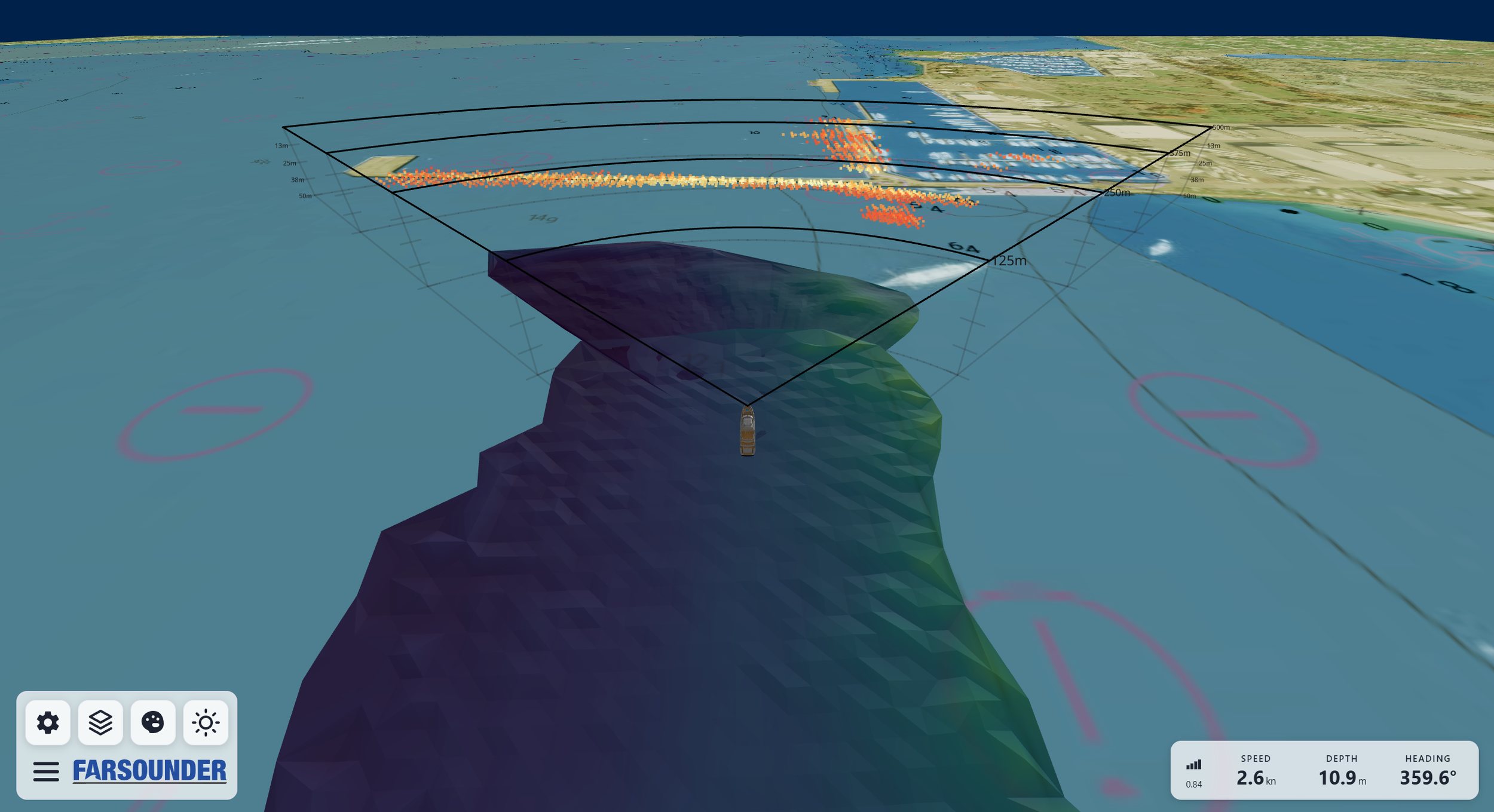
FarSounder's integration with Tocaro Blue's ProteusCore™ platform extends interoperability across its navigation ecosystem. Available within SonaSoft LT™, FarSounder's browser-based navigation interface, the integration combines AI-enhanced Radar perception with Argos 3D Forward Looking Sonar data to deliver a richer operational picture for vessel operators.
Bringing Intelligent Radar to SonaSoft LT™
FarSounder's Argos sonars provide real-time underwater perception ahead of a vessel, helping mariners detect and avoid submerged hazards. By integrating Tocaro Blue's ProteusCore™ software, operators enhance below and above water awareness with advanced Radar-based object detection and classification capabilities.
Tocaro Blue develops machine learning-powered maritime perception software that transforms conventional Radar into a more intelligent sensor. Leveraging training data from millions of Radar frames, ProteusCore™ automatically identifies and tracks contacts while improving environmental awareness through advanced signal processing techniques.
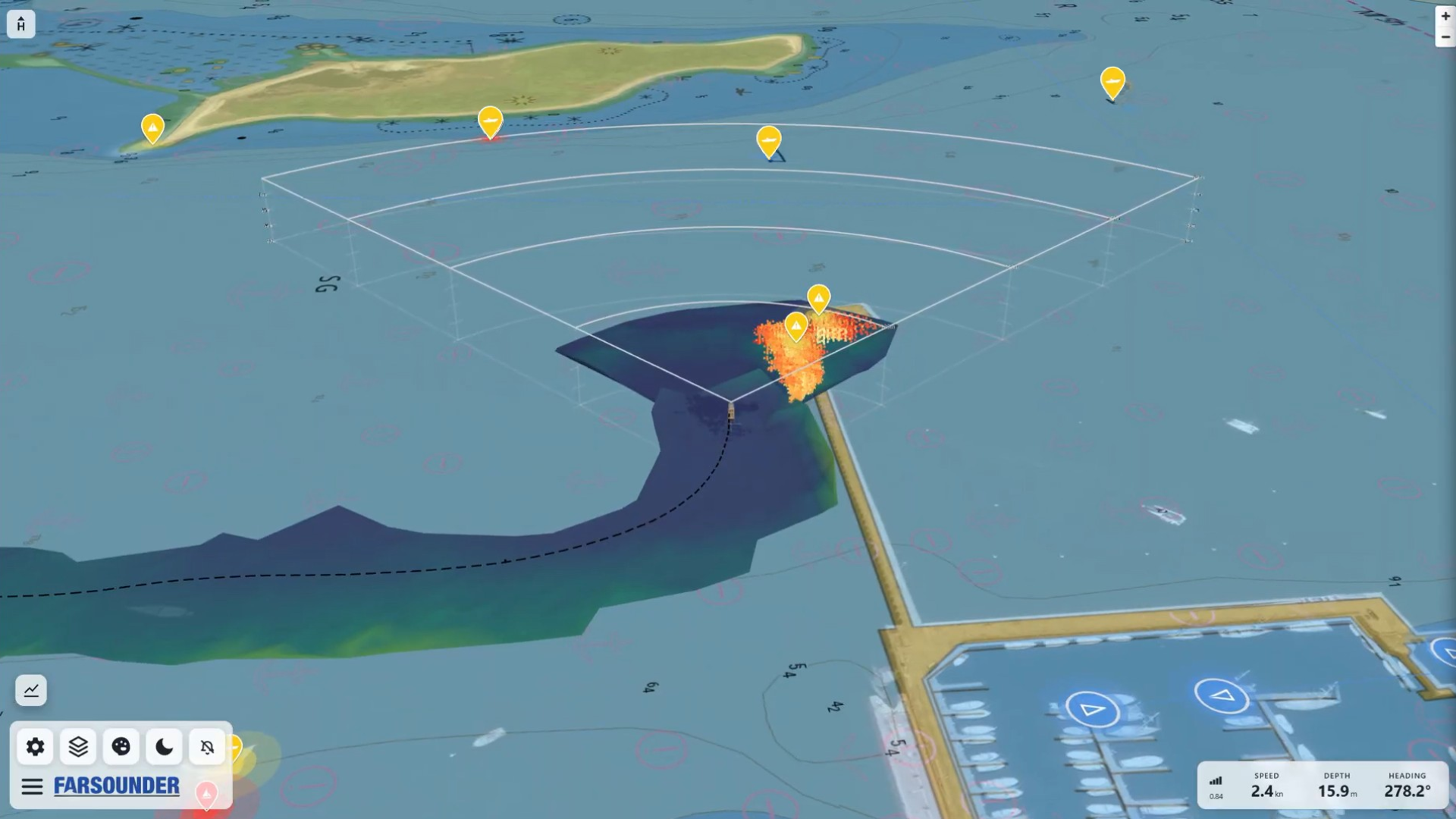
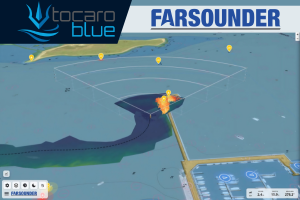
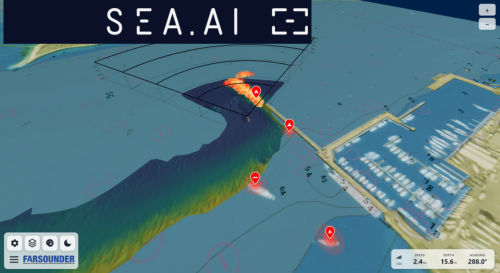
Radar detections from Tocaro Blue displayed through the SonaSoft LT™ User Interface
Within SonaSoft LT™, ProteusCore™ detections are displayed alongside Argos sonar data, enabling users to view information from multiple sensors through a single interface.
The combined system provides visibility of:
Underwater hazards and seafloor features detected by Argos 3D Forward Looking Sonar.
Surface contacts, including vessels, non-AIS targets, buoys, and shoreline features identified by ProteusCore™.
Standard AIS and ARPA targets supported within the FarSounder software suite.
Presenting these data streams together allows operators to correlate information more efficiently and maintain a better understanding of their surroundings, particularly when operating in congested waterways, reduced visibility, or unfamiliar regions.
Unified Sensor Information
A key advantage of the integration is the ability to present multiple layers of navigational information within a common operating environment.
Radar-derived contacts from ProteusCore™ are displayed directly within SonaSoft LT™, allowing users to visualize tracked objects alongside sonar detections and chart data. This unified presentation reduces the need to monitor separate systems and helps bridge teams evaluate potential hazards more quickly.
By combining information above and below the waterline, operators gain additional context when assessing vessel traffic, navigation aids, shoreline proximity, and underwater risks.
Advanced Radar Perception
ProteusCore™ introduces several capabilities that extend the functionality of traditional marine Radar systems.
These include:
AI-powered target detection and tracking.
Classification of vessels and other Radar contacts.
Detection of navigation aids and shoreline features.
Automated Radar optimization through ProteusCore™ Autofocus technology.
Reduced reliance on manual Radar adjustments in changing sea states and weather conditions.
Rather than requiring operators to continuously tune Radar settings, ProteusCore™ dynamically adjusts key parameters such as range and gain, helping maintain consistent performance as operating conditions change.
Supported Systems and Configuration
The integration is supported with ProteusCore™ 2.0 and later.
To enable the integration, a network connection must be established between the onboard computer running FarSounder's software and the computer hosting ProteusCore™. Once communication between the two systems has been established, the integration can be enabled directly through the SonaSoft LT™ settings menu.
Once configuration is complete, ProteusCore™ target information is received and displayed alongside Argos sonar detections and other integrations with above water perception systems like SEA.AI Cameras within the SonaSoft LT™ interface, providing operators with a unified operational picture.
For more information, contact us at: sales@farsounder.com